The Indian education system is a complex and multifaceted structure that plays a pivotal role in the country’s development. It comprises various levels, from primary and secondary education to higher education and research institutions. While it has evolved significantly since independence in 1947, it faces numerous challenges and opportunities.
The education system in India is characterized by its vastness, with millions of students enrolled in schools and universities. It encompasses both public and private institutions, catering to diverse educational needs. Indian education is heavily influenced by the British colonial legacy, with the 10+2 system and an emphasis on rote learning. However, there have been efforts to modernize the curriculum and adopt innovative teaching methods.
One of the key challenges faced by the Indian education system is ensuring access and quality education for all. Disparities in educational infrastructure and opportunities persist, particularly in rural areas. Furthermore, there is a growing emphasis on vocational and skill-based education to prepare students for the demands of a rapidly changing job market. The Indian education system is undergoing a transformation to adapt to the needs of the 21st century, fostering creativity, critical thinking, and problem-solving skills among students.
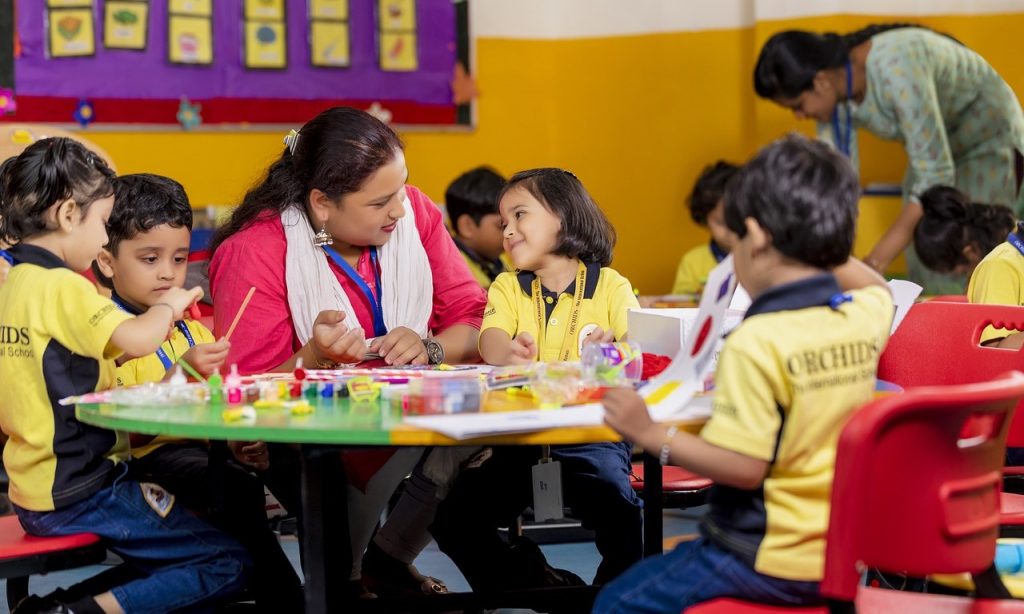
Kindergarten in India
Here are 30 interesting facts about Indian education system to know more about it.
- Ancient Roots: India has a rich educational heritage dating back over 2,000 years to institutions like Nalanda and Takshashila, which attracted scholars from around the world.
- Largest Youth Population: India has the world’s largest youth population, making education a critical factor in the nation’s development.
- Formal Education System: The British introduced the formal education system in India during the colonial period, which continues to influence the structure of education.
- Huge Enrollment: India has one of the world’s largest education systems, with over 1.5 million schools and more than 850 universities.
- Three-Tier System: The Indian education system follows a three-tier structure: primary (elementary), secondary (high school), and tertiary (university).
- Diversity of Languages: India is incredibly diverse in terms of languages, and its education system reflects this diversity with numerous regional languages of instruction.
- Central and State Education Boards: India has multiple education boards, including the Central Board of Secondary Education (CBSE) and various state education boards.
- Focus on Science and Engineering: Indian education places a strong emphasis on science, technology, engineering, and mathematics (STEM) subjects.
- Competitive Exams: Students face intense competition through various entrance exams for college admissions, such as the Joint Entrance Examination (JEE) and the Common Admission Test (CAT).
- IITs and IIMs: The Indian Institutes of Technology (IITs) and the Indian Institutes of Management (IIMs) are prestigious institutions known for their quality education.
- Open Universities: India has open universities like Indira Gandhi National Open University (IGNOU) that provide distance education to millions of students.
- Rote Learning: Traditional teaching methods in India have been criticized for promoting rote learning rather than critical thinking.
- Gurukul System: Historically, India had a Gurukul system where students lived with their teachers to receive education.
- Reservation Policy: India has a reservation policy for historically disadvantaged groups in educational institutions and government jobs.
- High Literacy Rates: India has made progress in improving literacy rates, with substantial growth in the number of literate individuals.
- Gender Disparities: Gender disparities in education still exist, particularly in rural areas, despite government efforts to promote female education.
- Global Diaspora: Indian education has produced a significant global diaspora, with many students studying abroad and contributing to various fields worldwide.
- Sanskrit and Yoga: Indian traditions like Sanskrit language and yoga are taught in some schools, fostering cultural preservation.
- Strong Alumni Networks: Prestigious Indian institutions have strong alumni networks that provide support and mentorship to students.
- Nobel Laureates: India has produced Nobel laureates in fields like literature, physics, and economics.
- Innovation and Entrepreneurship: The Indian government is promoting innovation and entrepreneurship through initiatives like “Start-up India.”
- Digital Initiatives: Digital India and e-learning platforms are changing the way education is delivered and accessed.
- Cultural and Art Education: Indian education also places importance on cultural education, including music, dance, and art.
- Festivals and Holidays: Schools celebrate a multitude of cultural and religious festivals, giving students exposure to India’s diverse traditions.
- Ancient Texts: Indian education includes the study of ancient texts like the Vedas and Upanishads in certain educational institutions.
- Quality Disparities: There are significant disparities in the quality of education between urban and rural areas.
- Educational Institutes Abroad: Many Indian students aspire to study at foreign universities, particularly in the United States and the United Kingdom.
- Foreign Collaboration: Indian universities are increasingly collaborating with foreign institutions for research and educational programs.
- Artificial Intelligence: India is exploring the integration of artificial intelligence and technology in education to improve learning outcomes.
- Philanthropic Initiatives: Philanthropic organizations and individuals are actively contributing to educational development and improving infrastructure.
The Indian education system, with its rich history and diverse landscape, stands as a reflection of the nation’s commitment to knowledge and enlightenment. While it faces challenges related to access, quality, and disparities, it is also a powerful engine of social mobility and a source of pride for the country. India’s education system has produced leaders, thinkers, and innovators who have made their mark on the global stage. As the nation continues to modernize and expand its educational infrastructure, it grapples with the dual challenge of preserving its ancient wisdom and fostering a culture of innovation and creativity. The future of the Indian education system lies in its ability to harness the immense potential of its youth and equip them with the skills and knowledge needed to navigate the complexities of the 21st century.


