Highland cows, often called “Heilan Coos” in Scotland, are one of the most recognizable cattle breeds in the world. With their long shaggy coats and distinctive sweeping horns, they have become symbols of the Scottish Highlands and an important part of the region’s natural and cultural heritage. Their unique appearance has made them increasingly popular in farming, tourism, and photography.
These cattle are believed to be one of the oldest registered cattle breeds on Earth, with documented history going back several centuries. Their origins lie in the rugged and often harsh environment of the Scottish Highlands, where only the strongest and most adaptable livestock could thrive. Highland cows developed distinctive traits—long hair, strong horns, and extreme hardiness—that allowed them to survive in freezing temperatures and rough terrain.
Despite their wild appearance, Highland cows are known for their gentle and calm temperament. Farmers often describe them as surprisingly docile, intelligent, and easy to work with, even though their horns can look intimidating to people unfamiliar with the breed. This combination of beauty, toughness, and friendliness has made them a favorite among both farmers and visitors to Scotland.
Today, Highland cattle are bred all over the world, from North America to Australia, because of their adaptability and high-quality beef. Whether seen grazing along hillsides in Scotland or featured in global tourism campaigns, these iconic animals continue to capture attention with their charm and unique characteristics.
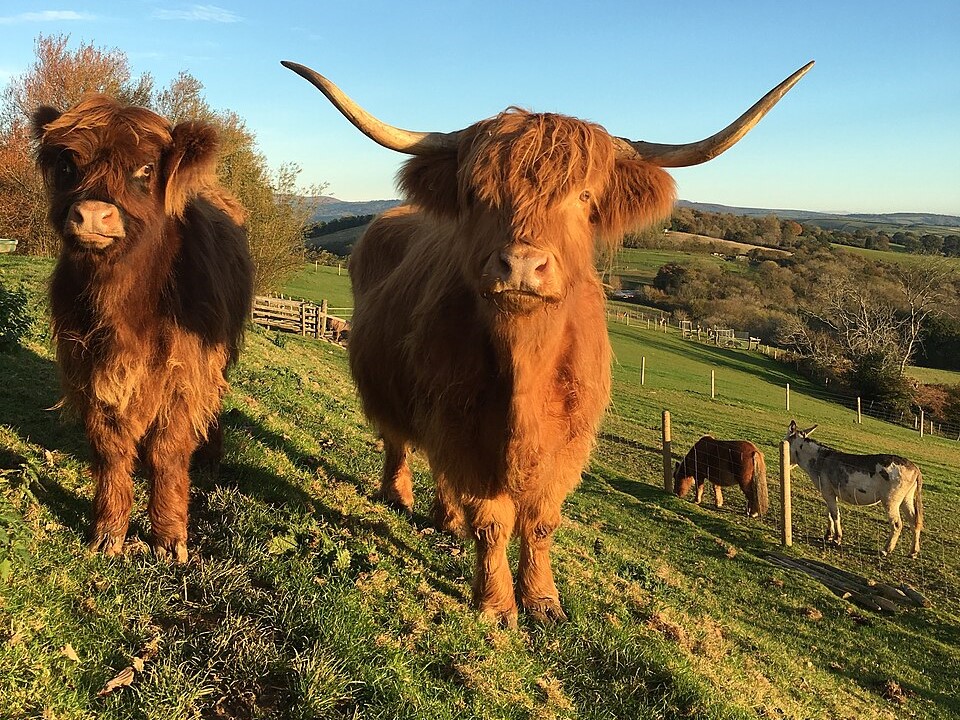
Highland Cows
To know more about Highland cows, it’s a good idea to look at these 33 interesting facts about Highland cows.
- One of the oldest registered cattle breeds: The Highland cattle breed was officially recorded in 1884 by the Highland Cattle Society, making it one of the world’s oldest recognized cattle breeds.
- Originated in the Scottish Highlands: Highland cows were bred for centuries to survive the cold, wet, and harsh conditions of the Scottish Highlands and western islands.
- Their long hair acts as insulation: A double coat, with a long outer layer and a soft, woolly undercoat, helps protect them from wind, rain, and snow.
- They come in many colors: Although ginger or reddish-brown is most famous, Highland cows can also be black, white, dun, silver, and yellow.
- Females and males both have horns: In Highland cattle, both cows and bulls grow horns, though bulls’ horns tend to be thicker and more forward-curving.
- Their horns help them forage: Highland cows use their horns to push aside snow, heather, and brush so they can reach grass and plants underneath.
- Hardy and disease-resistant: Due to their strong genetics and adaptation to harsh environments, Highland cattle are generally robust and less prone to some diseases than more delicate breeds.
- Known for gentle temperament: Despite their fierce looks, Highland cows are usually calm, docile, and friendly toward people when handled properly.
- They are smaller than many modern cattle: Compared with some large commercial beef breeds, Highland cows are relatively lightweight, which helps them move easily on hills and reduce damage to the land.
- Slow-maturing but high-quality beef: Highland cattle grow more slowly than some breeds, but their beef is lean, tender, and flavorful thanks to their natural grazing and hardy lifestyle.
- They naturally shed in warmer climates: Although famous for their thick coats, Highland cows will shed much of their long hair when kept in milder or warmer regions.
- Ideal for rough grazing: They can thrive on steep hillsides, rocky ground, and rough pastures where other cattle might struggle to maintain body condition.
- Excellent mothers: Highland cows are known for easy calving and strong maternal instincts, helping their calves survive tough weather and terrain.
- Long lifespan compared to other cattle: Highland cows can live up to 20 years or more, longer than many beef cattle breeds.
- They can tolerate extreme cold: With their insulating hair and hardy build, Highland cattle can withstand winter temperatures far below freezing.
- Originally known as “Kyloes”: Historically, Highland cattle from the western islands were called Kyloes, while those from the mainland were often simply known as Highlanders.
- Their coat helps keep their meat lean: Because their long hair provides warmth and protection, they need less body fat for insulation, resulting in leaner carcasses.
- They conserve body heat efficiently: Instead of relying heavily on fat reserves, Highland cows use their thick coat to retain warmth, which can reduce external fat levels.
- They eat a wide variety of plants: Highland cattle can graze on shrubs, coarse grasses, and rough vegetation, helping manage overgrown landscapes.
- Used in conservation grazing: Many nature reserves and parks use Highland cattle to control scrub growth and maintain diverse habitats in a natural way.
- Calves are born with shorter coats: Highland calves start with shorter hair, developing fuller coats as they grow, especially in cooler climates.
- They have strong natural immunity: Their hardy constitution and low-stress lifestyle can contribute to fewer health problems and reduced need for medications.
- Rarely require full housing: Even in snowy weather, Highland cows are often kept outdoors, needing only basic windbreaks rather than enclosed barns in many systems.
- Strong cultural symbol of Scotland: Highland cows appear in Scottish art, souvenirs, and tourism campaigns, representing the wild beauty of the Highlands.
- Popular among tourists: Visitors to Scotland frequently seek out “Highland coo” viewing spots and photo opportunities because of their distinctive look.
- A herd is called a “fold”: Groups of Highland cattle are traditionally called folds, a term linked to the stone shelters once used to protect them in winter.
- They are considered intelligent cattle: Farmers often note that Highland cows are quick to learn routines and respond well to calm, consistent handling.
- Adapted to low-quality forage: Highland cattle can maintain condition on land with poorer-quality vegetation, making them suitable for marginal areas.
- They are now found worldwide: Highland cattle are raised not only in Scotland but also across Europe, North America, South America, Australia, and New Zealand.
- Their long eyelashes protect their eyes: Thick lashes and hair around the face help shield their eyes from wind, rain, snow, and biting insects.
- Bulls can be surprisingly heavy: Mature Highland bulls can weigh up to around 1,800 pounds (about 800 kg), making them powerful animals despite their compact height.
- Associated with the British royal family: Queen Elizabeth II kept a fold of Highland cattle at Balmoral Castle, helping promote the breed’s visibility and prestige.
- They have inspired modern cattle keepers: Many small farms choose Highland cows not only for their beef but also for their appearance, friendliness, and suitability for pasture-based systems.
- Like other cattle, they can recognize human faces: Studies on cattle show that they can remember and distinguish individual humans and herd-mates over time, a skill Highland cows share with other breeds.
Highland cows are a remarkable blend of beauty, hardiness, and gentle personality. Their long hair, distinctive horns, and ability to thrive in rugged environments make them one of the most unique cattle breeds in the world. Over centuries, they have become an important symbol of Scottish culture and an iconic presence in Highland landscapes.
Today, their popularity continues to grow across the globe, thanks to their adaptability, high-quality beef, and friendly nature. Whether seen grazing in Scotland or featured on farms worldwide, Highland cows remain beloved animals admired for their charm, resilience, and historical significance.