Johns Hopkins University is a private research university located in Baltimore, Maryland. Founded in 1876, the university is named after its first benefactor, the entrepreneur and philanthropist Johns Hopkins. The university is known for its strengths in research, particularly in the fields of medicine, engineering, and the natural sciences. One of the unique features of Johns Hopkins University is the Hopkins-Nanjing Center for Chinese and American Studies, which is located in Nanjing, China. The center offers a dual-degree program that allows students to earn a master’s degree in international studies from Johns Hopkins University and a master’s degree from Nanjing University.
Johns Hopkins University is home to the prestigious Johns Hopkins Hospital, which is consistently ranked as one of the best hospitals in the United States. The university’s School of Medicine is also highly ranked and is known for its research in areas such as cancer, neuroscience, and genetics. In addition to its strong programs in medicine and the sciences, Johns Hopkins University is also known for its programs in the humanities and social sciences. The university’s Department of Philosophy, for example, is one of the best in the United States, while its School of Advanced International Studies is highly regarded for its programs in international relations and policy.
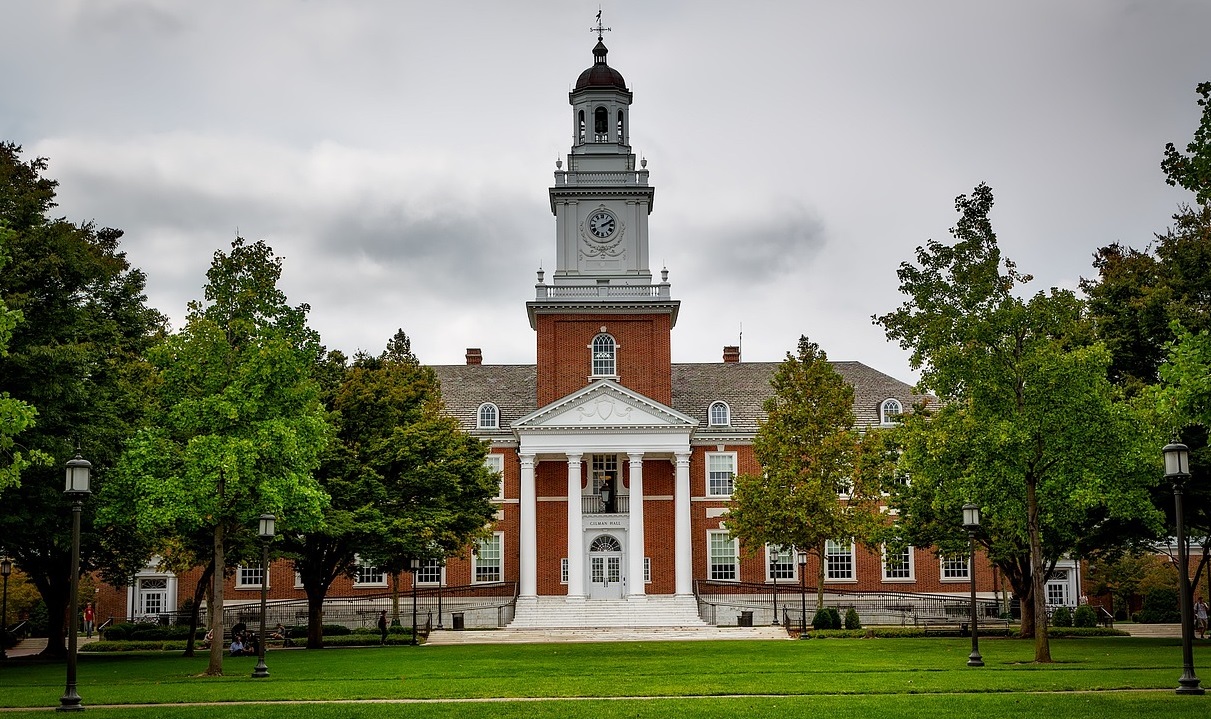
Johns Hopkins University
Do you want to know more about Johns Hopkins University? Here are 40 interesting facts about Johns Hopkins University that will give you more knowledge about this university.
- Johns Hopkins was the first university in the United States to have a research-focused curriculum.
- The university is organized into 10 divisions, including the Krieger School of Arts and Sciences, the Whiting School of Engineering, and the Bloomberg School of Public Health.
- The university is known for its strengths in the fields of medicine, public health, and biomedical research.
- Johns Hopkins is home to the world-renowned Johns Hopkins Hospital, which is consistently ranked among the top hospitals in the United States.
- Johns Hopkins has produced many notable alumni, including 36 Nobel laureates, 4 Pulitzer Prize winners, and 1 U.S. President.
- The university has a diverse student body, with students from all 50 U.S. states and more than 120 countries.
- Johns Hopkins has a long history of innovation and discovery, with many groundbreaking discoveries made by its faculty and researchers.
- Johns Hopkins is home to the Applied Physics Laboratory, a research division that works on projects for the U.S. Department of Defense and other government agencies.
- The university has a strong commitment to public service, with many programs and initiatives focused on improving the health and well-being of people around the world.
- Johns Hopkins has a large endowment of over $6 billion, which helps to fund its research and educational programs.
- The university is known for its beautiful campus, which features many historic buildings and green spaces.
- The university has a strong athletic program, with 24 varsity sports teams competing in the NCAA Division III.
- Johns Hopkins is a member of the Association of American Universities, an organization of leading research universities in the United States.
- The university has a strong commitment to sustainability, with many initiatives focused on reducing its environmental impact.
- Johns Hopkins is home to many research centers and institutes, including the Center for Health Security, the Berman Institute of Bioethics, and the Institute for Applied Economics, Global Health, and the Study of Business Enterprise.
- The university has a strong presence in the local community, with many programs and initiatives focused on improving education, health, and economic opportunity in Baltimore.
- Johns Hopkins has a robust online education program, with many courses and degree programs available to students around the world.
- The university is known for its rigorous academic programs, with many students pursuing majors in the STEM fields.
- Johns Hopkins has a strong commitment to diversity and inclusion, with many programs and initiatives focused on promoting equity and justice on campus and beyond.
- The university is home to many cultural organizations and events, including the annual Spring Fair and the JHUniverse Film Festival.
- Johns Hopkins has a strong international presence, with many partnerships and collaborations with universities and organizations around the world.
- The university has a long history of philanthropy, with many donors supporting its research and educational programs.
- Johns Hopkins is home to many museums and galleries, including the Johns Hopkins Archaeological Museum and the Evergreen Museum and Library.
- The university is known for its strong graduate programs, with many students pursuing advanced degrees in fields such as medicine, law, and business.
- Johns Hopkins has a strong commitment to civic engagement, with many programs and initiatives focused on promoting democracy and social justice.
- The university has a strong emphasis on interdisciplinary research, with many programs and initiatives focused on bringing together scholars from different fields.
- The university’s motto is “Veritas vos liberabit,” which means “the truth will set you free” in Latin.
- The Johns Hopkins Bloomberg School of Public Health is the oldest and largest public health school in the world.
- The Johns Hopkins Applied Physics Laboratory, a division of the university, has designed and built instruments for every NASA mission to Mars.
- The university has its own press, the Johns Hopkins University Press, which publishes over 150 new books each year.
- The Blue Jay, a bird native to the eastern United States, is the university’s mascot.
- Johns Hopkins is known for its outstanding medical programs, including the Johns Hopkins Hospital, which has been ranked the best hospital in the United States by U.S. News & World Report for 22 consecutive years.
- The Homewood Museum, located on the university’s Homewood campus, is a National Historic Landmark and was once the home of Charles Carroll Jr., a signer of the Declaration of Independence.
- Johns Hopkins has a long history of social activism, with students and faculty participating in civil rights protests, anti-war demonstrations, and other movements.
- The university has a strong commitment to sustainability and has implemented numerous green initiatives, including LEED-certified buildings and a bike-share program.
- The university’s Peabody Institute is one of the most prestigious music conservatories in the United States.
- The university’s lacrosse team has won 44 national championships, more than any other men’s or women’s lacrosse team in history.
- Johns Hopkins has a vibrant arts community, with numerous student-run theater groups, music ensembles, and dance troupes.
- The university’s athletic teams are known as the Blue Jays and compete in NCAA Division III.
- The Milton S. Eisenhower Library, named after the university’s eighth president, is the largest library in Maryland and one of the largest academic libraries in the country.
Johns Hopkins University is a prestigious and influential institution that has made significant contributions to the fields of medicine, public health, and research. With a rich history and a commitment to innovation and social activism, Johns Hopkins is known for its outstanding academic programs, world-renowned faculty, and talented student body. Its campuses in Baltimore, Maryland, and Washington, D.C. provide a diverse and dynamic learning environment, while its many centers, institutes, and labs enable cutting-edge research and discovery. From its founding as the first research university in the United States to its current position as a global leader in education and innovation, Johns Hopkins University continues to shape the future of academia and society.