Illumination refers to the process of providing light or other electromagnetic radiation to illuminate or light up a particular area or object. It encompasses the study and understanding of light, its properties, behaviors, and interactions with various materials. Light, which is a form of electromagnetic radiation, exhibits wave-like and particle-like properties, making it a fundamental phenomenon in physics.
The study of illumination involves understanding light propagation, reflection, refraction, diffraction, dispersion, and absorption. These processes describe how light behaves when it encounters different mediums, surfaces, or obstacles. Reflection deals with the bouncing back of light from a surface, while refraction is the bending of light when it passes from one medium to another. Diffraction refers to the bending and spreading of light around obstacles or through small openings, and dispersion refers to the separation of light into its constituent colors, often observed in a rainbow.
In practical terms, illumination is crucial in various fields, such as optics, photography, astronomy, and lighting technology. It’s also fundamental in the study of vision and perception. Engineers and designers use principles of illumination to create efficient lighting systems, displays, and optical devices.
Furthermore, the concept of illumination extends to quantum physics, where the behavior of light as photons is explained. Understanding light at the quantum level is essential in fields like quantum optics and quantum computing, shaping the future of technology and scientific advancements. In essence, illumination in physics delves into the fundamental nature of light and its applications across a broad spectrum of scientific disciplines.
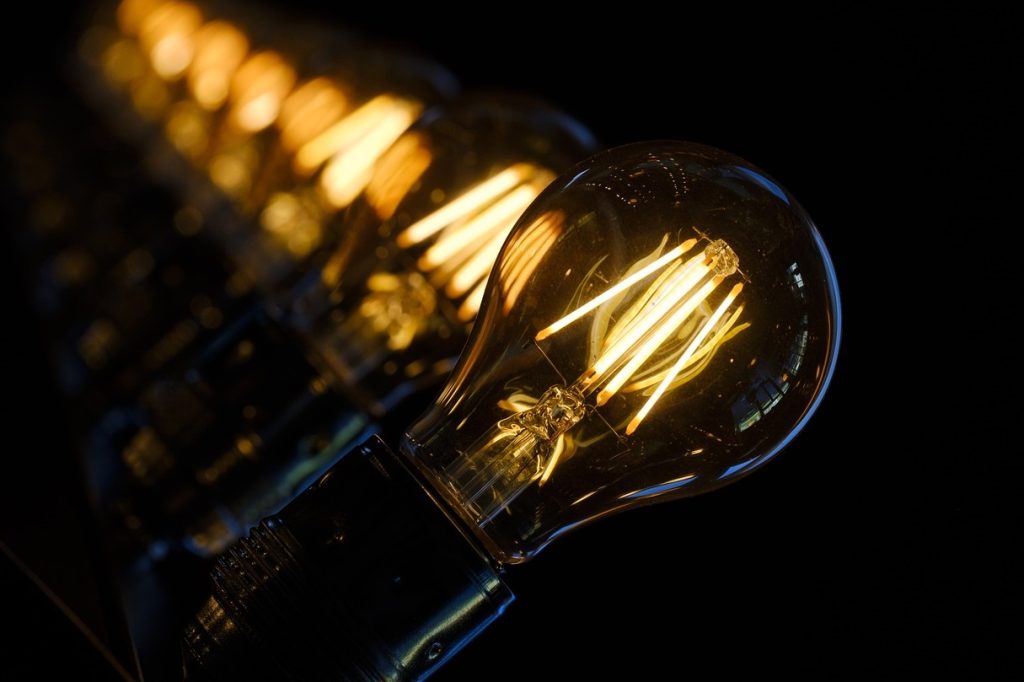
Illumination
Let’s take a look at these 26 interesting facts about illumination to know more about it.
- Ancient Beginnings: The history of illumination dates back to ancient civilizations like the Egyptians, who used oil lamps and candles for lighting.
- Early Light Sources: Early light sources included torches made of bundled reeds soaked in oil or animal fat, providing a basic form of illumination.
- Roman Contributions: Romans advanced illumination with the use of glass windows, allowing natural light to enter buildings and reducing the need for artificial lighting during the day.
- Medieval Manuscripts: Illuminated manuscripts were highly prevalent during the medieval period, especially in monastic scriptoria, where monks illustrated religious texts.
- Gold Leaf: Gold leaf was a commonly used material in illuminations due to its ability to reflect and enhance light, adding a luxurious and radiant quality to the artwork.
- Intricate Designs: Illuminations often featured intricate geometric patterns, floral motifs, and religious symbols, showcasing the artistic skills of the illuminators.
- Islamic Contributions: Islamic civilizations made significant contributions to illumination techniques, particularly in the design of intricate lamps and the use of colored glass.
- Candle Lanterns: Candle lanterns were widely used in various cultures, serving as portable light sources that could be carried around.
- Gas Lighting: Gas lighting gained popularity in the 19th century, providing a more efficient and brighter source of illumination compared to earlier methods.
- Thomas Edison: Thomas Edison is credited with inventing the first practical electric light bulb in 1879, revolutionizing indoor illumination.
- Edison’s Menlo Park Lab: Edison’s Menlo Park laboratory in New Jersey was a hub of innovation, where he and his team conducted extensive research on electric lighting.
- Fluorescent Lighting: Fluorescent lighting, invented by Nikola Tesla and patented by Peter Cooper Hewitt, gained prominence in the early 20th century for its energy efficiency.
- LED Lighting: The invention of the light-emitting diode (LED) in the 1960s has revolutionized lighting technology, offering energy-efficient and long-lasting illumination solutions.
- Lighthouse Illumination: Lighthouses were early adopters of advanced illumination systems, utilizing lenses and Fresnel lenses to focus and enhance the light emitted by lamps.
- Candle Clocks: Illuminated candle clocks, used in ancient China and Japan, marked time by measuring the height of a burning candle.
- Incandescent vs. LED Efficiency: LED lighting is highly efficient, converting about 95% of the energy into light, while incandescent bulbs convert only about 5-10%.
- Color Temperature: Color temperature in lighting is measured in Kelvins (K). Higher Kelvins (5000K-6500K) produce a bluer light, resembling daylight, while lower Kelvins (2700K-3500K) produce a warmer, more yellow light.
- Light Pollution: Light pollution is the excessive or misdirected artificial light produced by human activity that interferes with the natural darkness of the night sky.
- Bioluminescence: Some organisms, like fireflies and certain deep-sea creatures, are bioluminescent, producing their own light through chemical reactions.
- Neon Lighting: Neon lighting, invented by Georges Claude in 1910, uses neon gas to produce a distinctive glow when an electric current is passed through it.
- International Year of Light: 2015 was designated as the International Year of Light by the United Nations to raise awareness about light-based technologies and their importance.
- Light Therapy: Light therapy, or phototherapy, is a treatment for conditions like seasonal affective disorder (SAD) and sleep disorders, using artificial light to simulate natural sunlight.
- Laser Technology: Lasers (Light Amplification by Stimulated Emission of Radiation) produce a focused and intense beam of light, finding applications in various fields, including medicine, communications, and industry.
- Light Speed: Light travels at a speed of approximately 299,792 kilometers per second (km/s) in a vacuum, making it the fastest known phenomenon in the universe.
- World’s Brightest Light: The world’s brightest light is produced by a laser at the Lawrence Livermore National Laboratory, capable of reaching temperatures higher than those at the sun’s core.
- Biological Clocks and Light: Light plays a crucial role in regulating biological clocks, influencing our sleep-wake cycles and overall circadian rhythm, aligning our bodies with the natural day-night cycle.
Illumination, beyond the mere act of lighting a space, symbolizes the human quest for enlightenment and knowledge. It embodies the intrinsic desire to dispel darkness, not only in the physical world but also in the realms of understanding, wisdom, and compassion. From the flickering flames of ancient torches to the advent of LED lights, the journey of illumination mirrors our advancement as a species—both in harnessing the power of light and in kindling the spark of intellect within ourselves. As we navigate the intricate dance between light and shadow, we come to realize that illumination is not just about brightness; it is about clarity, revelation, and the profound realization that knowledge, like light, has the power to illuminate the path before us, guiding us through the intricacies of life’s tapestry.


